TRIGGER WARNING
Monday June 2, 2014 12:30 p.m.
I was trembling from the time I left my office, through the cell phone calls from my car trying to find help, to the time I pulled into the garage of the medical office park. I felt physically sick and lightheaded, and my emotions were swinging from anger to trepidation to relief and back. I was going to get to talk to someone and get this all out of me, and everything would be back to normal tomorrow. I locked up the car and headed to where I thought the entrance was for the Capital District Psychiatric Center. Every step was a struggle. I wanted to sit down in the middle of the road and just cry. But I made it to the building and, after a little confusion, found the right entrance. The door was locked, so I pressed the buzzer and waited, wishing there was a bench to sit on.
The unprepossessing entrance was opened by a wary face who only let me in as far as the vestibule, his eyes looking me up and down as if I could be hiding a weapon. I lifted my eyebrows, a bit surprised, and he explained that they had to be very careful about what went past those doors. He asked my purpose, and made sure I understood that if I admitted myself, I couldn’t leave until the doctors gave permission for me to leave.
I didn’t see a problem with that – I knew I wasn’t a danger to myself or anyone else, I just needed to talk to someone and I couldn’t wait six weeks for a regular therapist to be available. I was sure I’d be out in a few hours, so I signed the book and let him look through my purse, and then he unlocked the next door and let me in, locking the door behind me.
I had never been in an emergency room like this one. Being locked in made me apprehensive enough, but the place was dingy. An old box T.V. was attached up high in one corner. The wood and cloth chairs were bolted together and to the floor. There was only one wooden table with rounded corners, also bolted to the floor. The dull fabric looked stained. The glass door behind me had small lines running through it – some kind of security glass, I guess. It was cloudy with greasy fingerprints and smudges. I wouldn’t want to touch that door handle unless I was wearing gloves. There was another door to the left, locked with a small window at eye level, and a third door just like it straight in front of me. To the right was a reception area, with a staff person sitting behind more security glass. There was a long hallway to the right, with several gray metal doors with small windows.
Everything looked grubby, and there was an occasional waft of unwashed human bodies floating in the cold air-conditioned space. Curled up on a chair near the reception desk was a woman with unkempt hair, covered in a blanket up to her chin, sleeping. There was a litter of small brown paper bags on the chair next to her, and a half-eaten apple.
The staff person who admitted me regained my attention and took me through the door straight ahead. On the other side was a row of three closet-sized rooms, each with a table and a couple chairs. He gestured to one and explained that I would begin with some paperwork, and then there would be an initial intake interview. Then he left me alone with a pen and clipboard.
I pushed back my regret as I reached for the paperwork. Finally, something that made this place feel a little more like a legitimate hospital. Of course they’d get the money-part right. I filled in my insurance, took emergency contact numbers out of my cell phone, and was just finishing up the last form when a man and a woman walked in, smiling their welcomes.
I shook their hands and they walked me through the next steps. One was a social worker, the other a staff member trained in peer counseling and emergency aid. They were both kind and intelligent, so I relaxed a bit, ready to trust the process. The relief started to outweigh the trepidation.
When they asked why I was here, I gave them the short version first as background. I was abducted by a parent at 3; we were always on the run – went to 5 elementary schools; she beat the hell out of us with a metal cooking spoon and whatever else she got her hands on; I was a teenage runaway; I got pregnant and married at 19; that marriage ended with me in the hospital and him in jail; and my real father found me when I was 21; that I’d been having nightmares my whole life.
Then I told them what was new that brought me in here: that my step-father had died the week before, and I went to visit my estranged mother at my sisters’ request. That my sisters and I had gotten to talking, and that one sister revealed she had been raped – in our mother’s presence – when she was 9 years old. And after that I began having memories I had never had before. That I was afraid I might have been there when it happened. That I was so angry and had all these emotions I was struggling to control. I told them I just needed to talk to someone and get it all out because I felt completely wrong, like I would explode if I didn’t do something, anything.
They asked me if I had ever contemplated suicide, and I told them of course, just like anyone else, but I wouldn’t do it because I have two children I’m responsible for. That worried them at first, but once I explained that Demi was 29 and Daisy would be 16 in a few days, and that Demi and my ex-husband could take care of Daisy in my absence, then they were reassured. I did say that sometimes I thought that if I could just hang on for two more years, until Daisy went to college, then I could go away, perhaps forever. And that was partly why I was here, so I could make it the next two years, because the way I had been feeling and acting this past weekend, since Meg’s revelation, I wasn’t sure I could make it two weeks, much less two years.
As I’m writing this, I realize how dramatic that sounds, but when I was facing those two people, I didn’t want to hide anything. I wanted help, real help, so I quietly told them the truth. I tried not to cry, but I did reach for a tissue and did my best to keep my cheeks dry and speak calmly. I wished ruefully that someone else would take care of me for awhile. I have been taking care of someone else since I was six years old. I was just so tired, too tired to be a strong, normal, responsible person anymore.
They took plenty of notes but still managed to give me their full attention. They made me feel like they really heard me and they cared. I felt like I was finally going to get help. They said I would need to wait in the waiting room for a little bit, while they reached out to my primary care physician. They also took my purse and cell phone, apologizing and explaining that they would be locked up safe and that they couldn’t have those things in with other patients. They would try not to be too long and would come back to me with some next steps.
So I went back out to the waiting room, relieved and obedient. An hour later, I was a little impatient but amused. Just like a hospital, the wait is always longer than the doctor visit. I watched other patients come and go, some staying with me waiting. A couple of them spoke with me, freely telling me their stories. I have a neon sign on my forehead that says “I want to hear your life story” and often people obey that sign, even if all I want to do is crawl under a rock and deal with my own problems.
I was surprised to still be in that small room with people who were quietly rocking or walking and talking to themselves at 5 p.m., when they handed out brown paper bags of cheese sandwiches and applesauce. I asked if I could call my daughters at that point, because they were expecting me home from work soon. They let me get the numbers off my cell phone, but I had to wait while someone fetched it, then I had to keep my hands and cell phone inside the tiny window on the receptionist’s desk. No cells allowed for a single second in the waiting room. I used the landline provided for patients to call my girls and explain where I was. I promised I’d call them as soon as I knew anything further.
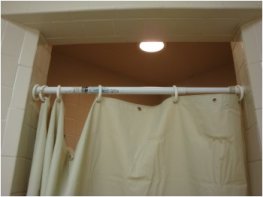
I went to use the bathroom and immediately knew I had made a mistake. No way did I belong in this place. This wasn’t a hospital, it was a minimum security prison. There was a shower in there with a torn black curtain and a floor that was too grimy for bare feet. There was toilet paper but no trash can and no paper towels and no mirror and – what was worse – no lock on the door. I went back to the receptionist to explain I was on my period but there was no trash can, and he told me I had to wrap my ladies things in toilet paper and put it in the cardboard box of trash under the TV in the waiting room, the worst place for privately throwing something away because the whole room was facing that direction. He handed me a tiny bar of soap, like what you’d get in a hotel, and a rough white washcloth he said I could use to dry my hands. He said to just leave it in the bathroom.
I was in that waiting room a total of seven hours before one of the intake staffers spoke to me again. By then, my anxiety was higher than it was when I had walked in.




 Erase and Start Over