The alarm went off. I reached groggily for my phone and slid the alarm screen to snooze. I must finish my tax return today, I thought. Then my arm and phone dropped heavily by my side, and I drifted off as if I had never left sleep.
I couldn’t find Demi. I searched all over the house, never questioning that I was back in the home of my first marriage. She wasn’t in her bedroom with the pastel pink, blue, and yellow curtains I had made her. She wasn’t in the living room, where her Teddy Ruxpin bear was laying on the carpet before the couch. I searched from morning until twilight all over that tiny house, even peering through the garage, but she was gone, vanished. My panic kept rising like bile in my throat. She was so little, just five years old, and night was falling. She couldn’t survive alone all night.
I went to the front door and finally opened it, thinking I’d go drive the neighborhood, and there she was, curled up on the front porch in front of the door, sound asleep. There were streaks of grimy tears running down her face. Her little hands were tucked under her chin, and I could see they were dirty and blood-stained, like she’d been scratching at something and tore her nails bloody. Something squeezed my heart painfully as I looked at that sweet, beautiful, clearly traumatized little girl. I turned my head slightly and saw the marks along the lower part of the front door. I suddenly imagined her, kneeling at the door, crying, screaming, calling for me and clawing and scratching to get back in; trying to claw her way in all day, finally giving up, finally realizing that no one was going to save her, not even her mother.
The alarm went off again, jarring me awake, but a part of me was still standing at the door in that nightmare, feeling the horror and guilt of recognizing that I had hurt my own child. The adrenaline pumped so hard that I wasn’t the least bit sleepy. My heart and breath were both going double-time.
It was just a nightmare. Demi had never been missing, I told myself, not ever. Not even for an hour, much less a whole day. She had never hurt herself by scratching a door. I knew logically that none of it had ever happened. So why did I hurt so much? I slid the alarm off and peered at the phone. 6:11 a.m. The whole dream took all of ten minutes.
Sighing, I flopped over onto my back and lay there, steadying my breathing. Demi was down the hall, 29 years old, and likely hitting the snooze on her own alarm clock. I have to get up, get ready for work, and take Daisy to school. But I didn’t move. I felt so heavy in heart and body. My skin was trapped in the clawing sheets, punishing me by pulling me down into the uncomfortable mattress. I could hear the water running in the bathroom beyond my bedroom door, but whoever was there couldn’t know that I was in trouble. I couldn’t shake this feeling that I had sinned against nature, that there was something inherently wrong with me, that I was a bad mother, bad employee, bad person and deserved to sink into that nightmare tangle of bedclothes and never wake up.
My face was wet. My girls were awake. I dug my fingernails into the mattress, silently fighting back, and pushed myself up into a sitting position. “Snap out of it,” I whispered fiercely. Gritting my teeth, I made myself look at my phone, and click the news app. Oscar Pistorius sobbed during his testimony that he didn’t mean to shoot his girlfriend. Russia was claiming it didn’t mean to invade Ukraine, that it wasn’t their fault. Good. My boss was not in the news today. That means it should be a slow day.
I stood up, grabbed my clothes, and headed for my own shower. I thought I should probably talk to someone about these difficult mornings, but I was ashamed to admit that it was hard for me to get out of bed for something so silly as a nightmare. I just have to do a better job of eating right and exercising. My nightmares were my own fault. Somebody in this world needs to step up and take responsibility.
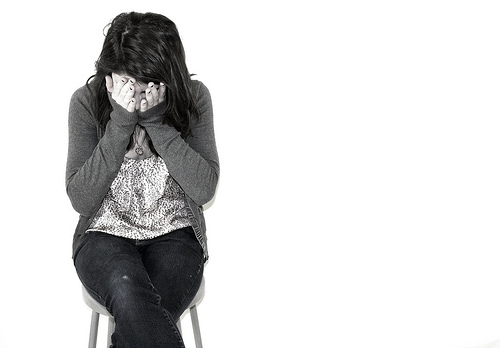
It’s hard to breathe. My veins feel carbonated; tiny bubbles with that same slight burn throughout my limbs and torso that I often feel against my tongue when drinking soda. I’m slightly disoriented, as if my airy blood is trying to make me float. My forearms are light. They can’t help but rise up toward my face. My chest is pounding. I must breathe. Just for a minute. I don’t want to do anything, think anything, feel anything. I just want to sit and breathe, very still, with my face buried in my hands.
I know it’ll pass. It always does. I just wish I could get through a day without freezing. Without feeling rising memories and having to involve my whole body to keep those thoughts at bay so I can focus on work, family, paying bills, doing dishes…
It’s hard to keep up with simple daily life when I must drop everything, without warning, and breathe for half an hour. But I do it. I must keep going. I begin my DBT exercises.
The floor is beneath my feet. I can feel the floor. The iPod is playing in my daughter’s room. I notice the song. I notice my daughter is humming to the song. The room is warm. I can feel the temperature of my skin, sending signals that the room is too hot. I open my eyes. In front of me is my coffee cup. It is solid. It is blue. It has a flower pattern. It is empty. I can smell overripe bananas. I remember that I meant to toss the bananas out this morning. My head turns toward the kitchen, and..
I’m out of it. I rise naturally toward the kitchen, not dizzy, not scared. I feel myself again. I toss the bananas, wrap up the trash and easily lift it to the front door. Okay, back to my day.
I guess I should begin by telling you where I am, but first let me just say how ridiculous it is that I have to ask permission to have a Q-tip to clean the water out of my ears after a shower. They’ll give me this pen and leave me alone for an hour to journal my thoughts, but heaven forbid I should be left alone with a dangerous cotton swab. Between you and me, I’m guessing I could do way more damage to myself with a pen, but I’m just the patient. What do I know.
I’m in a loony bin.
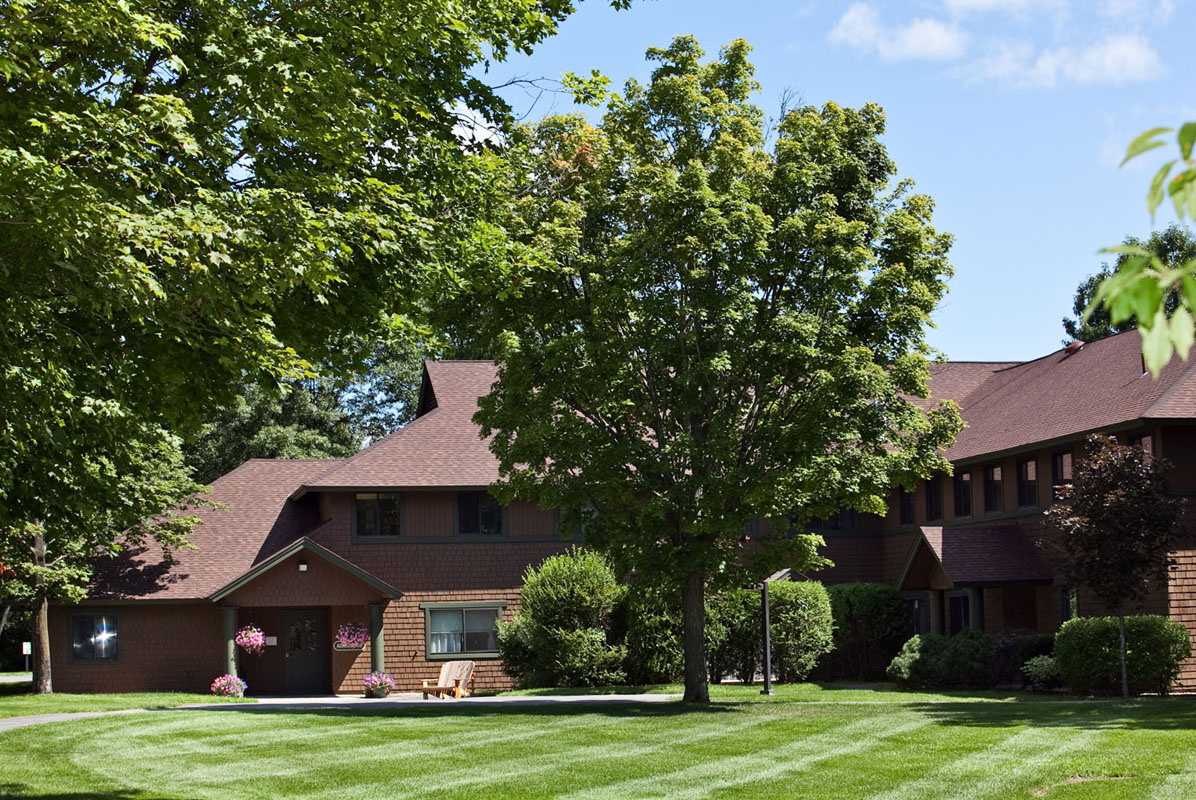
Okay, okay, I know that’s not fair. The accommodations are far from a cuckoo’s nest. Not quite hotel-like, but more of an upscale college dorm. The rooms are clean, with wall-to-wall low-nap blue carpeting. The beds are comfortable enough. Everyone has the exact same simple pine furniture – a nightstand, bed, small bureau, and a desk with a chair. For a minute there, I thought I wasn’t allowed to have a trash can, either, but when I saw that my roommate had a trash can, I asked for one, too, figuring the person who empties them must have forgotten to put it back. There’s a bathroom with a shower in every two-person bedroom. I am thankful for that. Some dorms make you walk down the hall in a robe to shared showers. I was surprised to find that the shower is pretty roomy with a nicer shower head than what I have at home. At least I only have to share it with one other person.
All the rooms come off a long, carpeted hallway that has attractive pictures on the wall of simple scenes with flowers or fishing boats. It smells nice, here. There are scent-diffusers placed around some of the public areas. They told me it was some kind of aromatherapy. Pleasant. A light mix of eucalyptus and lavender.
The public places include a game room with a long table on one side that could seat eight, and some soft armchairs with small tables on the other. There were a couple bookshelves filled with games and books, and a flat screen TV on the wall. The windows were huge, looking into the center courtyard between all the buildings on the property. It’s summer, so the trees are all full and the flowers profuse.
There’s a small kitchen with a table that could seat four, a refrigerator filled with lemonade, yogurt, and tea, a coffee pot with all the necessary java makings, a sink and dishwasher, and cupboards filled with hand-me-down table service. There’s even ice cream and sherbet in the freezer.
There’s also a large common room filled with couches and armchairs that is mostly used for group therapy sessions, but they said that on the weekends people can watch movies or sing with a karaoke machine. The windows here open out onto a sunny patio with wrought-iron patio furniture including big green umbrellas for shade.
My first impression when I arrived yesterday was one of relief. This place is a thousand times better than that psychiatric emergency room I came from. Today, though, I know it’s all gilding. The pictures cannot be moved, not even to set it a little straighter. They are glued to the walls. Someone walks in to check on me every 15 minutes, all day and all night. They woke me up last night and told me I couldn’t pull the covers so closely around my head because the person with the flashlight needs to quickly see I’m okay and move on to the next patient.
All of my belongings – except my clothes – are behind a front desk, and I have to ask for my hairdryer or purse. I cannot use a razor unless there’s a staff-woman free who can watch me use it. I’m not allowed to use my cellphone. I must stand in line and wait my turn to use the landline on the wall or the one behind the folding glass doors for a bit more privacy. I’m not allowed to have visitors other than my immediate family, and then only once a week.
I’m required to follow the schedule on the whiteboard, attend each meeting no matter how much I wish to just be left alone to think. I have to ask permission to sit outside in the fresh air. I need permission to go for a walk, and can only go if there are enough other patients who want to go at the same time and there’s an available staff person to escort us. I have to stand in line for my morning and evening pills, and if I want to sit in my room until the line dies down, a staff person will come find me and tell me to get in line. They are nice enough about it, but some of the staff look at us like we are cats they are trying to herd.
I’m in a hospital, no question, and I can’t leave until they say I can.
I was trembling from the time I left my office, through the cell phone calls from my car trying to find help, to the time I pulled into the garage of the medical office park. I felt physically sick and lightheaded, and my emotions were swinging from anger to trepidation to relief and back. I was going to get to talk to someone and get this all out of me, and everything would be back to normal tomorrow. I locked up the car and headed to where I thought the entrance was for the Capital District Psychiatric Center. Every step was a struggle. I wanted to sit down in the middle of the road and just cry. But I made it to the building and, after a little confusion, found the right entrance. The door was locked, so I pressed the buzzer and waited, wishing there was a bench to sit on.
The unprepossessing entrance was opened by a wary face who only let me in as far as the vestibule, his eyes looking me up and down as if I could be hiding a weapon. I lifted my eyebrows, a bit surprised, and he explained that they had to be very careful about what went past those doors. He asked my purpose, and made sure I understood that if I admitted myself, I couldn’t leave until the doctors gave permission for me to leave.
I didn’t see a problem with that – I knew I wasn’t a danger to myself or anyone else, I just needed to talk to someone and I couldn’t wait six weeks for a regular therapist to be available. I was sure I’d be out in a few hours, so I signed the book and let him look through my purse, and then he unlocked the next door and let me in, locking the door behind me.
I had never been in an emergency room like this one. Being locked in made me apprehensive enough, but the place was dingy. An old box T.V. was attached up high in one corner. The wood and cloth chairs were bolted together and to the floor. There was only one wooden table with rounded corners, also bolted to the floor. The dull fabric looked stained. The glass door behind me had small lines running through it – some kind of security glass, I guess. It was cloudy with greasy fingerprints and smudges. I wouldn’t want to touch that door handle unless I was wearing gloves. There was another door to the left, locked with a small window at eye level, and a third door just like it straight in front of me. To the right was a reception area, with a staff person sitting behind more security glass. There was a long hallway to the right, with several gray metal doors with small windows.
Everything looked grubby, and there was an occasional waft of unwashed human bodies floating in the cold air-conditioned space. Curled up on a chair near the reception desk was a woman with unkempt hair, covered in a blanket up to her chin, sleeping. There was a litter of small brown paper bags on the chair next to her, and a half-eaten apple.
The staff person who admitted me regained my attention and took me through the door straight ahead. On the other side was a row of three closet-sized rooms, each with a table and a couple chairs. He gestured to one and explained that I would begin with some paperwork, and then there would be an initial intake interview. Then he left me alone with a pen and clipboard.
I pushed back my regret as I reached for the paperwork. Finally, something that made this place feel a little more like a legitimate hospital. Of course they’d get the money-part right. I filled in my insurance, took emergency contact numbers out of my cell phone, and was just finishing up the last form when a man and a woman walked in, smiling their welcomes.
I shook their hands and they walked me through the next steps. One was a social worker, the other a staff member trained in peer counseling and emergency aid. They were both kind and intelligent, so I relaxed a bit, ready to trust the process. The relief started to outweigh the trepidation.
When they asked why I was here, I gave them the short version first as background. I was abducted by a parent at 3; we were always on the run – went to 5 elementary schools; she beat the hell out of us with a metal cooking spoon and whatever else she got her hands on; I was a teenage runaway; I got pregnant and married at 19; that marriage ended with me in the hospital and him in jail; and my real father found me when I was 21; that I’d been having nightmares my whole life.
Then I told them what was new that brought me in here: that my step-father had died the week before, and I went to visit my estranged mother at my sisters’ request. That my sisters and I had gotten to talking, and that one sister revealed she had been raped – in our mother’s presence – when she was 9 years old. And after that I began having memories I had never had before. That I was afraid I might have been there when it happened. That I was so angry and had all these emotions I was struggling to control. I told them I just needed to talk to someone and get it all out because I felt completely wrong, like I would explode if I didn’t do something, anything.
They asked me if I had ever contemplated suicide, and I told them of course, just like anyone else, but I wouldn’t do it because I have two children I’m responsible for. That worried them at first, but once I explained that Demi was 29 and Daisy would be 16 in a few days, and that Demi and my ex-husband could take care of Daisy in my absence, then they were reassured. I did say that sometimes I thought that if I could just hang on for two more years, until Daisy went to college, then I could go away, perhaps forever. And that was partly why I was here, so I could make it the next two years, because the way I had been feeling and acting this past weekend, since Meg’s revelation, I wasn’t sure I could make it two weeks, much less two years.
As I’m writing this, I realize how dramatic that sounds, but when I was facing those two people, I didn’t want to hide anything. I wanted help, real help, so I quietly told them the truth. I tried not to cry, but I did reach for a tissue and did my best to keep my cheeks dry and speak calmly. I wished ruefully that someone else would take care of me for awhile. I have been taking care of someone else since I was six years old. I was just so tired, too tired to be a strong, normal, responsible person anymore.
They took plenty of notes but still managed to give me their full attention. They made me feel like they really heard me and they cared. I felt like I was finally going to get help. They said I would need to wait in the waiting room for a little bit, while they reached out to my primary care physician. They also took my purse and cell phone, apologizing and explaining that they would be locked up safe and that they couldn’t have those things in with other patients. They would try not to be too long and would come back to me with some next steps.
So I went back out to the waiting room, relieved and obedient. An hour later, I was a little impatient but amused. Just like a hospital, the wait is always longer than the doctor visit. I watched other patients come and go, some staying with me waiting. A couple of them spoke with me, freely telling me their stories. I have a neon sign on my forehead that says “I want to hear your life story” and often people obey that sign, even if all I want to do is crawl under a rock and deal with my own problems.
I was surprised to still be in that small room with people who were quietly rocking or walking and talking to themselves at 5 p.m., when they handed out brown paper bags of cheese sandwiches and applesauce. I asked if I could call my daughters at that point, because they were expecting me home from work soon. They let me get the numbers off my cell phone, but I had to wait while someone fetched it, then I had to keep my hands and cell phone inside the tiny window on the receptionist’s desk. No cells allowed for a single second in the waiting room. I used the landline provided for patients to call my girls and explain where I was. I promised I’d call them as soon as I knew anything further.
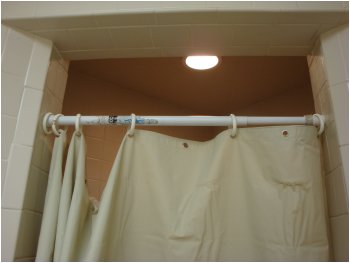
I went to use the bathroom and immediately knew I had made a mistake. No way did I belong in this place. This wasn’t a hospital, it was a minimum security prison. There was a shower in there with a torn black curtain and a floor that was too grimy for bare feet. There was toilet paper but no trash can and no paper towels and no mirror and – what was worse – no lock on the door. I went back to the receptionist to explain I was on my period but there was no trash can, and he told me I had to wrap my ladies things in toilet paper and put it in the cardboard box of trash under the TV in the waiting room, the worst place for privately throwing something away because the whole room was facing that direction. He handed me a tiny bar of soap, like what you’d get in a hotel, and a rough white washcloth he said I could use to dry my hands. He said to just leave it in the bathroom.
I was in that waiting room a total of seven hours before one of the intake staffers spoke to me again. By then, my anxiety was higher than it was when I had walked in.
Do not read this post if there is any chance that you can be negatively affected by reading about sexual assault.
Friday July 11, 2014 around 8:50 a.m.
I was on 787, driving to work, half-listening to Marketplace on NPR. Traffic was busy but steady, and I anticipated a light day at the office. I was thinking about the therapy session I had the evening before – EMDR (Eye Movement Desensitization and Reprocessing), which I was told is a psychotherapy that enables people to heal from the distress of disturbing life experiences faster than traditional therapies. Try anything once, is my usual motto.
The therapist had me put on a set of earphones connected to something that looked like a Walkman. It played a series of beeps, first in one ear and then in the other. Then she had me recount one of my memories. I told her about the time my first husband tried to strangle me.
It may seem odd, but I’ve had the memory so often and it’s appeared in nightmares so regularly that I’m really not bothered by the story anymore. It was a long time ago, and it’s only useful for advocacy purposes now. I told her the story just as easily as I’ve shared it at speaking engagements in front of women’s groups over the years.
Nothing happened. I pondered that now, as I was driving. I had felt a little silly, wearing the headphones and hearing those beeps while talking about a serious topic. It felt a little like it was minimizing what happened to me, making light of it. Maybe that was part of the point. I remember thinking that I would be uncomfortable listening to those beeps while recounting my most recent memories – and then there it was.
Just like that, in the middle of the highway, I remembered. The memory I had been fighting against, ever since my sister told me about her memory six weeks ago, was suddenly right there. I saw his face, I knew I was on the couch in our house in California, and I knew what was about to happen.
I shut down my mental white walls quickly, glancing in all my mirrors at the traffic, grounding myself in the present. My heart was pounding, and I was shivering to the point that my teeth were chattering. I started counting the cars I could see in the traffic, carefully noting where they were and any shifts in speed and lanes. I listened carefully to everything being said on the radio, as if I would have to recite it later. I could smell the cold in the air from the air conditioner. Part of the DBT training we had in the hospital taught us that noticing every little thing around us can help keep us in the present.
It all happened so fast, and my reflexes kicked in the same way they do if I sneeze while driving and involuntarily close my eyes. Just like a sneeze, the glimpse of the memory appeared and shut down, and I was driving as if nothing had happened. I couldn’t stop shivering, but the steering wheel was solid under my grip, I was breathing normally, seeing normally, driving normally, and I made it to the parking garage without incident.
Once the ignition was off, I leaned my head on the steering wheel, gripping it as if it were a lifeline. DBT be damned – I was safe now, and by God I needed to know what happened.
TRIGGER WARNING
I was on the brown sofa in the living room on Cass Avenue. I know I was 10 years old because that was my age in that house. There was music playing. A record dropped with its soft plunk, and music played. He was in front of me, smiling and stroking my hair. I kept trying to turn my head to look around the room, but he placed a hand on my cheek to keep my head from turning. He told me I was a good girl, a sweet, pretty, good girl. He asked me if I liked him, and I nodded.
With one hand on my cheek, keeping me still, his other hand traveled all over me. He asked if I liked how that felt. He slipped a hand inside my panties, then pulled them down, all the while whispering what a good girl I was.
I remember I was trembling, uncomfortable and confused. This was mommy’s friend and I knew she would be mad if I wasn’t nice to him. I didn’t understand why his hands were on me, but it didn’t hurt, and he was very nice to me, so I didn’t do anything. Then he put a finger inside me, and asked me how that felt.
I was so surprised, I couldn’t say anything. I didn’t know there was an empty spot there to put something in. He moved slightly, and I felt this strange warm glow down there. I could feel my eyes were very wide, and I looked down at what he was doing. He was naked. I don’t remember him taking his clothes off. I saw his pee-pee, and quickly looked up away from it. He laughed softly, as if he were trying to stay quiet.
He took his hand from my cheek and slowly pushed me back on the couch. His face was inches from the top of my hair and I thought for a minute he was going to kiss my forehead. I could almost feel the short, scratchy hairs from his chin. Then he took his hand away from below, and I could feel something bigger pressing there.
Then there was a blinding pain, like I was being ripped open, and I opened my mouth to scream. He quickly put a hand over my mouth, and the pressure and my thrashing made my head turn to what he didn’t want me to see.
My mom was asleep on the big, round papasan chair. Her hair was messy, all over her face. She was in her long, furry robe. That’s right, it was cold outside. I could see part of the fireplace hearth, and there was some silver tinsel leftover from Christmas laying there. The tree-table was between me and mom. She didn’t hear me. She didn’t know I needed her. The table was between us, that big slice of a tree trunk, polished and glossed, where I had spent many lazy afternoons counting the rings. The table was littered with beer bottles and filled ashtrays, but one spot was cleared off and only had some uneven lines of white powder. There was music playing.
That was it. The memory abruptly ended, leaving me hanging like the flipping of broken film at the end of a movie reel. I slowly left 1975 and realized my hands were hurting from gripping the steering wheel so tight. I threw back my head and gulped huge mouthfuls of air.
I felt a dozen emotions crowding in on me, all clamoring for attention. I was frightened. No, I was remembering feeling frightened. I was in disbelief. How could I possibly not remember that happening? How could I go forty years, and be unwaveringly positive in all that time that I had never been sexually assaulted as a child?
And no way were there drugs in the house. I never remembered such a thing. There were no hints of it in any of my regular memories – except that time I flew back to California to visit friends when I was in seventh grade in Kansas City. My old friends from California took me to a party where there was a bong being passed around. I didn’t touch it – I was too nervous and we thankfully left quickly. I guess it was more prevalent there than it was in Kansas City. Whatever. This memory was wrong. It had to be wrong. It wasn’t real.
And I was angry. Over everything else, I was incredibly angry. I grabbed the steering wheel again, lowering my head and screamed at it, forgetting for a moment that I was in a public parking garage. The sound snapped me out of it, and I remembered I was supposed to be walking to the office. I gathered my things and got out of the car, automatically being the good girl, going to work and doing what I was supposed to do, but I saw every detail of his face the whole way.
I made it to the bench outside the Assembly side elevators in the Capitol building, and sat there, trying to slow down my heart and breathing and do my DBT drill. I dug out my phone and called my therapist. No answer. I left her a lengthy voicemail. I sat wondering who else I could call. Then I remembered a friend of mine had been a child advocate in the court system. I called her, and she knew exactly what to say. She made me get a peppermint out of my purse. She made me touch the floor and describe what I felt. She walked me through my DBT until I felt silly for getting all worked up over something that happened forty years ago. I set my head straight, got up, got on the elevator, and went to work, being the responsible person I was supposed to be. But I was still quietly angry.
I was on automatic. I showered, dressed, had coffee, drove my youngest to school. My responsibilities were completed in numb automation, but there was a silent struggle going on in my mind and body. I wanted to stop and scream – she was raped and I was there! I was trembling with anger. I wanted to call the police. I wanted to hop in the car and drive to North Carolina and look that woman in the face and demand her apology, demand she get on her knees and beg forgiveness from all of us sisters. I wanted to throw her in a rehab facility and swallow the key, then smash every bottle she has in the house into the kitchen sink.
I parked and hung my employee tag on the rear view. Gathered my things, locked the car and walked to the elevator. I let my eyes follow the trees through the elevator glass, idly pretending I was climbing up them, like I always imagine when riding those elevators. I stepped out and walked past Congress park, as usual, and idly wondered for the umpteenth time what the city was doing with that old fountain, now surrounded by signs of construction. I paused at the traffic signal, waiting, staring up at the walls of the New York State Capitol building.
The powerful structure rose several stories above my head, unashamedly representative of a monarch’s seat, with red-orange turrets and intricate carvings. The building usually centered me, its carefully crafted beauty inside and out reminding me that someone, somewhere, cared deeply about a good job well done. Just a few weeks ago, I was among a handful of people negotiating a $22 billion budget for 700 school districts, in a small room on the first floor of that beautiful building. Not a good job well done.
I didn’t want to walk in there. The halls echoed with the powerlessness of good people trying to do the right thing. Politics too often trumps proven research, and about a quarter of the decisions made are to support a re-election campaign rather than the needs of the people. Much as I loved the building, I couldn’t stand facing another impotent day of work. Fighters don’t belong on hamster wheels.
But there was nothing I could do about it. A single mom doesn’t just quit her job. Policy analysts are a dime a dozen in Albany. There was nowhere else to go.
The beeping of the crosswalk signal brought me out of my reverie. I walked across the street, pulling my security pass out of my purse. My eyes were wet with helplessness. I couldn’t quit. I couldn’t call the police. I couldn’t stop in the middle of the street and scream. I couldn’t protect my sister. I ran. I ran and left her there.
I made it to the policy pit on the fourth floor mezzanine, dropping my bag on my desk. One of my co-workers got up to hug me, saying she was sorry for my loss. With her arms around my shoulders, I realized I had almost forgotten about my step-father, whose ashes sat before us at the wake just four days ago. I felt ashamed anew, and couldn’t hold it back anymore. I clung to her, sobbing my heart out, much to the surprise of everyone in the room. The story just spilled out – I told her that I had just found out that my sister had been raped at 9 years old, that Mom just watched.
I backed away, realizing I shouldn’t have said that out loud, and saw the shock and concern on my coworkers’ faces. I gulped and pulled it all back together. Grabbing a tissue off my desk and drying my face, I apologized and waved everyone off, telling them I was fine and just needed to focus on work.
I sat down to sort through my missed emails from the last week, but focus was not coming to me. Impatiently, I opened my snail mail instead, and automatically began sorting. Then I sorted all the files that were scattered untidily all over my desk. Then I got some paper towels and cleanser from the bathroom and started cleaning my desk. I scrubbed the phone, my keyboard, even my chair. And when there was nothing left to clean, not a single paper out of place, I stared back at the computer and realized there was no way I could understand a single piece of legislation today. I emailed my supervisor that I was going home, shut off my computer, told my coworkers that I’m sorry, I’m just not feeling well, and left. I didn’t even make it to noon.
I drove two blocks before I realized I had no idea where I was going. I pulled into an empty parking spot on the street and called a therapist I had seen the year before. She could see me in a couple weeks. I googled more therapists on my phone. Three, four, six weeks before anyone could see me. One of them told me that if it were an emergency, I could go to the Capital District Psychiatric Center, and check myself in. I googled it and drove there, figuring I’d talk with someone for a few hours, feel better, and be back to work the next day.
I didn’t realize that it would be a month before I saw the Capitol building again.
Looking back on that Sunday, June 1st, I don’t remember much, but I know the overwhelm took me. I didn’t give in to it – I know what giving in feels like. Giving in is when you come home with drive-thru nachos and microwavable kettle corn, turn on Netflix and binge watch for eight hours. Giving in is my mother with red wine swirling in her morning orange juice. Giving in to overwhelm is a conscious decision to put the world on hold and self-medicate for awhile. It’s a miracle that I prefer salt over alcohol in my worst state. I tell myself that whenever I take my blood pressure medicine. It could be worse.
No, on that particular Sunday the overwhelm took me, without my permission.
My girls say it seemed as though I had the flu pretty bad that day. My walk was unsteady whenever I got up for the bathroom or water, I had no appetite, I was alternating freezing cold and sweating hot, and I mostly slept.
I remember there were nightmares. I think I cycled through just about every recurring nightmare I’ve ever had and then some. My first husband’s fingers around my throat. My sisters screaming. Running and running but not able to get anywhere.
My waking moments were all memories:
Me, falling out of bed and getting my lip split on the corner of the nightstand. Getting stitches. I was 3.
Mom, sitting dejectedly on the end of the couch, cigarette smoke making rings around her tousled hair, her make-up-smeared eyes red and bleary. I had stayed home from school to make sure she didn’t carry out her threat to kill herself that day. I was 16.
Walking stiffly for a drink at the water fountain in the police station, my uniformed escort asking me why I was so formal, and me telling him I was not going to cry. I was 25.
Being slammed into the bathroom wall of the Pink Garter, a stranger’s lips forcibly taking mine. She had followed me in and had me pinned, her whole big, muscular body crushing me against the wall. I struggled and fought and was thankfully released to run when someone else walked in. I never thought a woman would ever do such a thing. I was 18.
Mom, kicking me as I lay curled up in a sleeping bag on the floor in my room. Kicking me again and again, screaming horrible insults at me. I was 15.
A door being slammed in my face. More stitches. I was 7.
Carrying a ringed pillow from class to class in junior high, telling everyone I had chipped my tailbone from a fall off my roller skates. I was 13.
Daddy #3’s finger in my face, threatening me literally into a corner, and Mom behind him telling me to just say yes, daddy. I was 17.
The videographer who offered to drive me home from an evening SCA event, pulling into the back of a grocery store and telling me he was in pain and only I could help him. He unzipped his pants. I convinced him that I was on my period. He said that’s okay, I could still help him and I wasn’t going home until I did. It was him or face a metal cooking spoon for missing my curfew. I was 14.
Walking six miles in the middle of the night, jumping into shadows any time a car came by, not knowing if my parents were after me. I carried a small bag of clothes and was headed to an older friend’s apartment. I didn’t know where I would go from there, but I was never, ever, going home again, not until I had made enough money to rescue my sisters. I was 17.
My sisters and I, all neatly dressed and sitting on the couch facing the CPS investigator. We told her we were fine, happy, that there was nothing wrong. No way were we going to let this stranger separate us girls from each other. I was 15.
Being slammed into the coat closet door and then rocked onto the living room carpet. Being straddled with his hips on my thighs and his knees on my hands and his hands around my throat, squeezing and squeezing until the black cloud came and I knew I was dying, knew I would never see my little girl or my sisters again. I was 25.
That’s but a handful of the memories I cycled through that day. And now I had four new memories:
1. Me in the pool, looking up at my naked, nine-year-old sister on the diving board.
2. Me, ten, running from the pool, tripping, hearing men’s laughter.
3. Mom, sitting in a pale pink wrap in the patio set by the pool, smoking and saying “just say yes daddy” over and over.
4. A man standing by the pool, between the diving board and the patio set. But that’s for tomorrow’s post.
One night, when I was 15, I knelt before my bedroom window, looking up at a full moon. The house was quiet. My youngest sister, Beth, silent in the next room. They had beat her hard that night. Her screams and sobs still rang in my ears today, but all was quiet and the house was dark at that moment in my memory. I remember kneeling there with my hands folded in prayer, appealing to the distant, peaceful orb that hung in the night as if that were God’s face, blurred by my powerless tears, and not the man in the moon.
Please, God. Please don’t let me wake up tomorrow. Please, take me to heaven tonight. Please. I can’t do this anymore.
That’s how I felt on June 1st, 2014. But in my despair that overwhelming Sunday, I knew then what I didn’t know for sure at 15. The morning was coming, and there was nothing I could do about it. I was going to wake up.
I could hear one of the girls in the shower across the hall from my room. The rhythm of the running water pattered me into a slightly wakeful state. I was aware of my bedroom, aware that I had been sleeping soundly, aware of the weight of my body on my stiff twin bed.
Someone was laughing. A few someones. Male. My mind was drifting back to 1975, and I was scrambling out of the pool. I tripped and fell, splat, on the concrete. They were laughing. Don’t look back, I thought. Run. I clambered up and ran, bare feet making wet splats toward the side of the house.
I opened my eyes. My bookshelf swam into view. It was dusty. I need to dust my bookshelf, I thought, shivering with cold as if I had just gotten out of a pool and walked into air conditioning. I didn’t move from my side, tightly curled and shivering, staring at that bookshelf.
I was there. I couldn’t deny it anymore. My sister, nine-year-old Meg, was naked on the diving board. It was night. I was in the pool. I’ve been remembering being in the pool. And now …there’s more: I climbed out of the pool. I was running. I was afraid. I tripped. Men were laughing.
I squeezed my eyes shut, blocking out the sound of the running shower, trying to return to that lucid state, to 1975. I could remember the pool. Liver-shaped. Small. It was night. I could see the pool light from under the water. I pushed up from the bottom, enjoying the buoyant feel as I broke the surface, blinking back the chlorine and taking a deep breath of fresh, cool night air.
Who was there?
Meg was on the diving board at the far end of the pool. I was on the right, by the house. I tried to turn the eyes in my memory to the left, but like a scratched DVD, the scene skipped to me tripping on the concrete. I remember picking myself up. Run. But I did turn at the sound of the laughter. My back was to the pool, and I turned slightly right. Not far enough to view all around that side of the pool and to the diving board, but just a little. My wet bangs hung in my eyes, but I could see her. Sitting in one of the black wrought-iron chairs, a wine bottle sitting on the matching round, black patio table.
It was Mom.
There was a knock on my door. No, I thought. I’m almost there.
The door opened and my firstborn peeked in. “Mom? You okay?”
Mom. My mom was wearing her faded pink terrycloth robe. I remember it had a pattern in the fabric, little raised square bumps. It was knee-length. She sat there with her legs crossed, bare legs under a short, pink wrap. She was smoking. She was saying something. I strained to hear it.
“Mom?”
My daughter’s voice pulled me reluctantly into the present. I nodded, accepting that the memory was gone, and started to sit up. My mouth was so dry, and my eyes were burning from the chlorine. No, wait – what was real? I shook my head as if to clear it. My daughter sat on the end of my bed, looking concerned. I tried to speak, but could only clear my throat.
“It’s okay,” I finally managed. “I think the road trip just took a lot out of me. I am so beat.”
She offered to drive her sister to her friend’s house. I had forgotten. That’s why she was in the shower. I accepted and we talked about dinner for the girls and how she had done her sister’s laundry so I could sleep. I assured her I’d be back to normal tomorrow, and smiled as she left, shutting the door behind her.
I sat looking ruefully at the door. The whole day was wasted. I failed my girls today. My stomach tightened. Then my throat. My eyes grew hot and misty. The room blurred, and I was back in 1975.
I was there. Meg was naked on the diving board. It was night. I was in the pool. I climbed out of the pool. I was running. I was afraid. I tripped. Men were laughing. And Mom was smoking a cigarette. She was saying, “Just say yes, daddy.” Whispering it, over and over.
Faintly, I heard the front door shut. I think the girls called out goodbyes and feel betters before the door shut. But the blood was pounding in my ears. I was there. Meg was there. Men were there. Mom was there. I was afraid.
The room was dark and I felt stiff and cold, sitting still so long. I reached tiredly for my phone. 11:02 p.m. I had just lost six hours.
I snapped out of my reverie and looked up to see my youngest standing in my bedroom door.
“Hm? You need something? What time is it? You must be hungry.”
“No, I had cereal – I just wanted to know if you’re doing laundry today. I need jeans.”
I reached for my cell and was surprised to see the morning had flown by. My Kindle was in sleep mode. I must have spaced off after the show. I rubbed a hand tiredly over my face.
“Yes, of course. Give me a minute. Can you put your laundry by the front door and I’ll take it down? I just need another minute.”
She left the door standing open, and I could see my firstborn peeking in from down the hall. I smiled and called out a good morning, and she good-morninged me back and disappeared, apparently satisfied that I was fine.
Of course I was fine. Just tired. It was a long, cramped drive home yesterday. Anyone would be bone-weary tired after that. I sighed and looked around the room absently, running over the checklist in my head. I had forgotten to take my blood pressure medicine, so I washed it down with the cold dregs of my coffee, and got up to change into old clothes, my housecleaning day wear.
The girls had done a great job in the kitchen. I was afraid I’d come home to a sink full of dishes and piles of trash bags waiting to be taken out, but all was neat enough. There was leftover pizza in the fridge. A few days of junk food was to be expected. I added grocery-shopping to my list for the day, and then just froze, one hand on the closed door of the fridge, staring at the shopping list held up by a magnet, but not seeing it.
I couldn’t do it. I just knew, I could not leave the house that day. I couldn’t picture myself able to get into the car, much less drive it. I gripped the refrigerator door handle tighter, my nails digging into my skin. My heart starting pounding. My breath was shorter and quicker. I felt suddenly cold all over. I couldn’t do it. I almost wanted to whimper out loud, please don’t make me do it, but felt ridiculous in this unreasonable fear. What was wrong with me? It’s just grocery shopping.
I scolded myself into letting go of the door handle, but as I walked out of the kitchen, I turned back down the hall to my room instead of toward the laundry in the living room. I paused in my doorway, both hands on the frame, holding myself up. I called out to the girls that I was more tired than I thought, and would do laundry in a couple hours. I just need to nap a bit more.
I crawled into bed, shaking like a leaf, and eyes brimming over onto hot cheeks, pleading silently to the empty air – please don’t make me. Make me what? The walls slammed down on all sides, and I went limp, like a puppet with cut strings. My heart called for my sisters, and a welcome memory appeared of me and my sisters as adults all hugging each other and grieving together, one big huddle of sisters. Breathing easier, I fell asleep.



 Erase and Start Over